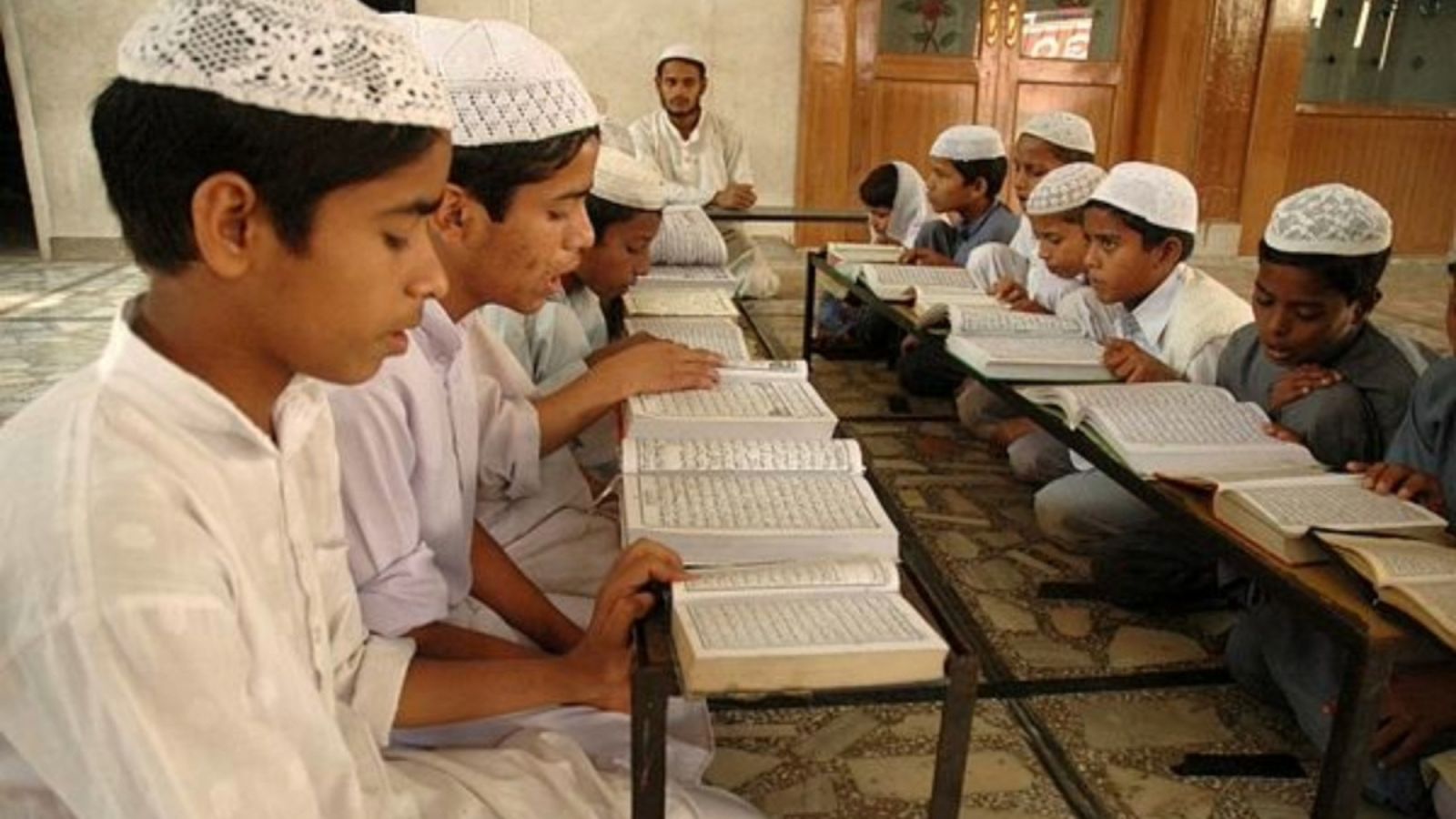
Uttarakhand has become the first state in India to abolish its statutory Madrasa Board, replacing it with a Minority Education Authority that will regulate educational institutions run by all six notified minority communities. The Uttarakhand State Authority for Minority Education (USAME) was inaugurated by Chief Minister Pushkar Singh Dhami, marking a significant shift in the state’s approach to minority education. Under the new arrangement, educational institutions of all six notified minority communities, including Muslims, Christians, Sikhs, Parsis, Jains, and Buddhists, will come under the category of minority educational institutions.
The state currently has 452 registered madrasas, which were previously recognized by the Madrasa Board. The Madrasa Education Board Act, 2016, and the Uttarakhand Non-Government Arabic and Persian Madrasa Recognition Rules, 2019, have been repealed and replaced by the Minority Education Act, 2025, and Uttarakhand Minority Educational Institutions Recognition Rules 2026. The newly instituted Authority has 12 members, including professors of economics, psychology, law, and a retired English teacher from Kumaun University, to design an academic curriculum for the students in the minority institutions.
The chief minister stated that the initiative towards quality and modern education would provide a strong foundation for the future of every child in the state. The government’s goal is to ensure equal opportunities for every child and enable them to progress through modern education, technology, and skill development. The establishment of the Minority Education Authority is not intended to affect the identity or traditions of any community but to provide better educational opportunities to all sections of society.
The application process for recognition has been moved online, making it mandatory for institutions to apply through a designated government portal. They will be asked to submit the required documents and fees online. Each recognition will remain valid for three academic years, and renewal applications must be submitted at least three months before the expiry of the current recognition.
The authority will review all applications and may conduct physical inspections where necessary. Provisions have also been made for revoking recognition in cases of rule violations, with due opportunity for a hearing before any such action is taken. The Act was drafted by the Strategic Advisory Committee on Innovation and Effective Implementation, constituted in June 2025.
The committee has Chief Minister Pushkar Singh Dhami as its chairperson and chief secretary, principal secretary, planning, two retired civil service officers, the CEO of SETU Aayog, and former chief secretary of the state, Shatrughan Singh, and social activist Manu Gaur as its members. The move comes after more than a year following the implementation of the Uniform Civil Code, which again made the state the first in independent India to bring in the code. The constitutional validity of minority educational institutions had earlier reached the Supreme Court, which upheld the Uttar Pradesh Board of Madarsa Education Act 2004 as constitutional.
The court stated that the right of religious minority to establish and administer education institutions is protected by Article 30, and the Board and the state government have sufficient regulatory powers to prescribe and regulate standards of education for the Madrasas. The court also held that the right of minorities to administer educational institutions is not absolute, and the state has an interest in maintaining the standards of education in minority educational institutions and may impose regulation as a condition for grant of aid or recognition. The constitutional scheme allows the state to strike a balance between the two objectives of ensuring the standard of excellence of minority education institutions and preserving the right of the minority to establish and administer its education institutions.