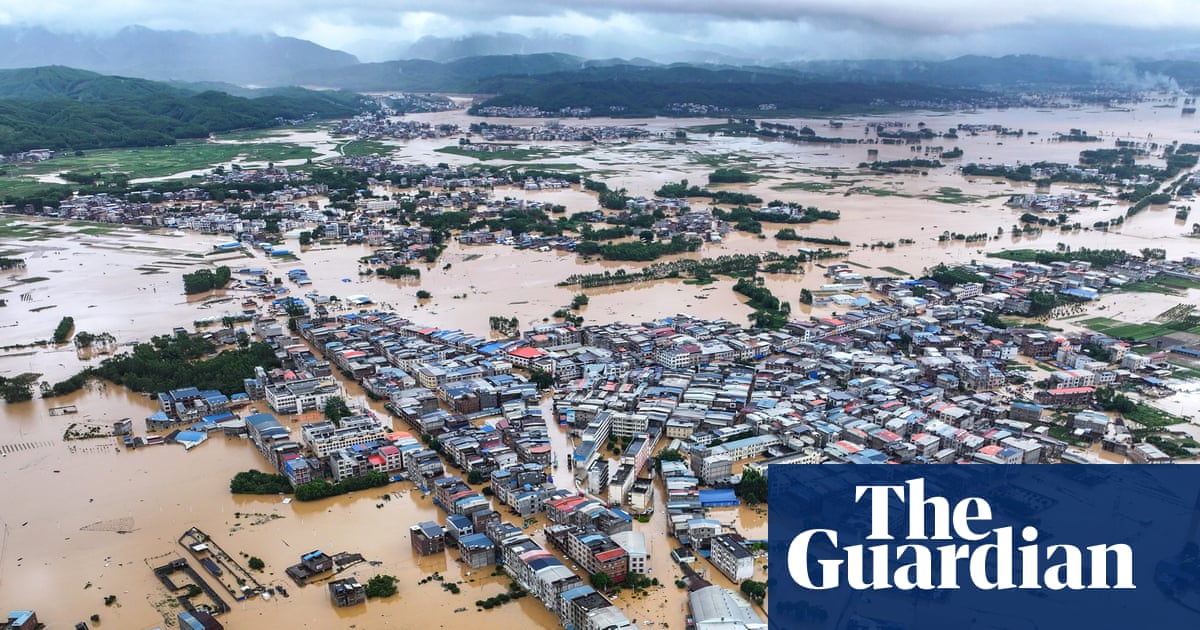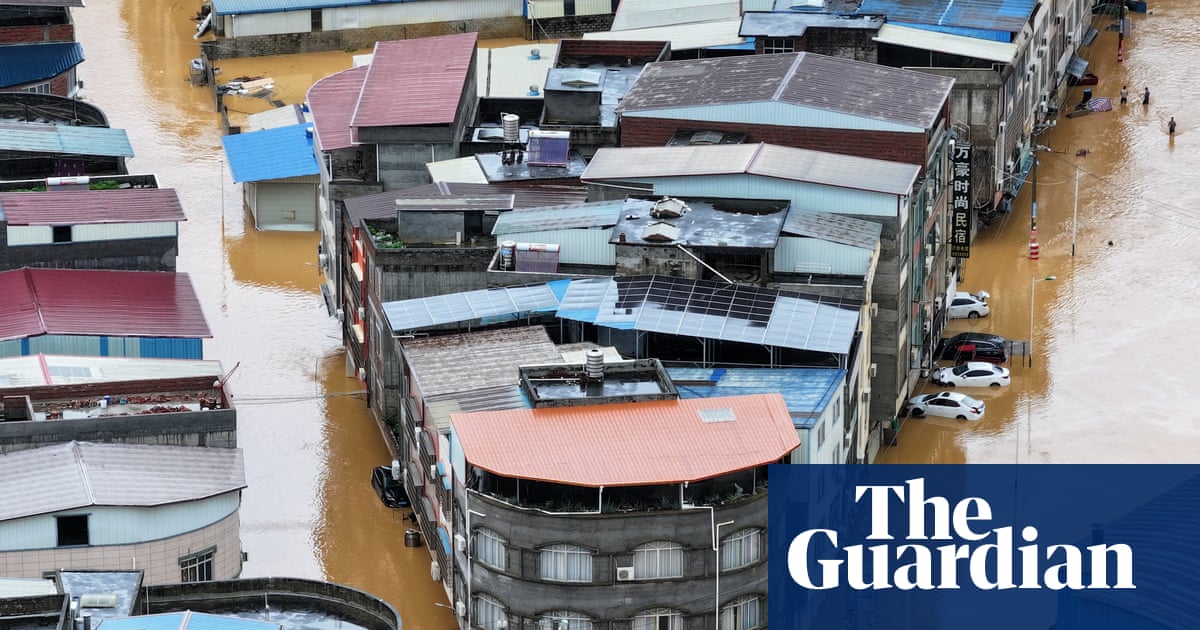
Typhoon Maysak has caused widespread destruction and loss of life in southern China, killing two people in Nanning, the capital of Guangxi province. The tropical storm made landfall in the southern island province of Hainan on Friday and a second landfall in Vietnam on Sunday, before moving into China. About 55,000 people have been affected by floods in Nanning, with waters overflowing or breaking through barriers at at least three reservoirs. Approximately 48,000 people have been evacuated from the area.
The city’s deputy mayor, Wei Jiang, reported the dam breaches and evacuations on Monday. The flood control emergency response has been raised to its highest level due to the extremely heavy rain, which is expected to worsen the situation and hamper rescue efforts. In the city of Guigang, about 170 miles away from Nanning, flood waters have turned a wide road into a lake, submerging cars and cascading into a building site.
The water level at Guigang hydrological station had risen to 42 meters by 12:30 pm, according to the ministry of water resources. In Fangchenggang, a verified video showed a small car being washed down a street, with the water rising to the level of another car’s steering wheel. Meanwhile, China is also on alert for Super Typhoon Bavi, which is making its way across the Pacific Ocean towards Taiwan.
The US National Weather Service reported that Bavi is bringing winds of up to 180mph as it passes through the islands of Guam, Tinian, Saipan, and Rota. Weather authorities have warned that Bavi will bring strong winds and heavy rain to eastern China from Thursday. China faces growing threats from extreme weather, which meteorologists link to the climate crisis.
Analysts say that weather-related risks stand to wipe out tens of billions of dollars’ worth of commercial activity each year, as cities flood, industrial activity stalls, and crops are submerged or washed away. Heavy rainfall is expected across Guangxi, Guizhou, Hunan, and other regions in the coming days, according to Chinese meteorologists. The affected areas are home to more than 150 million people, more than the population of Russia.