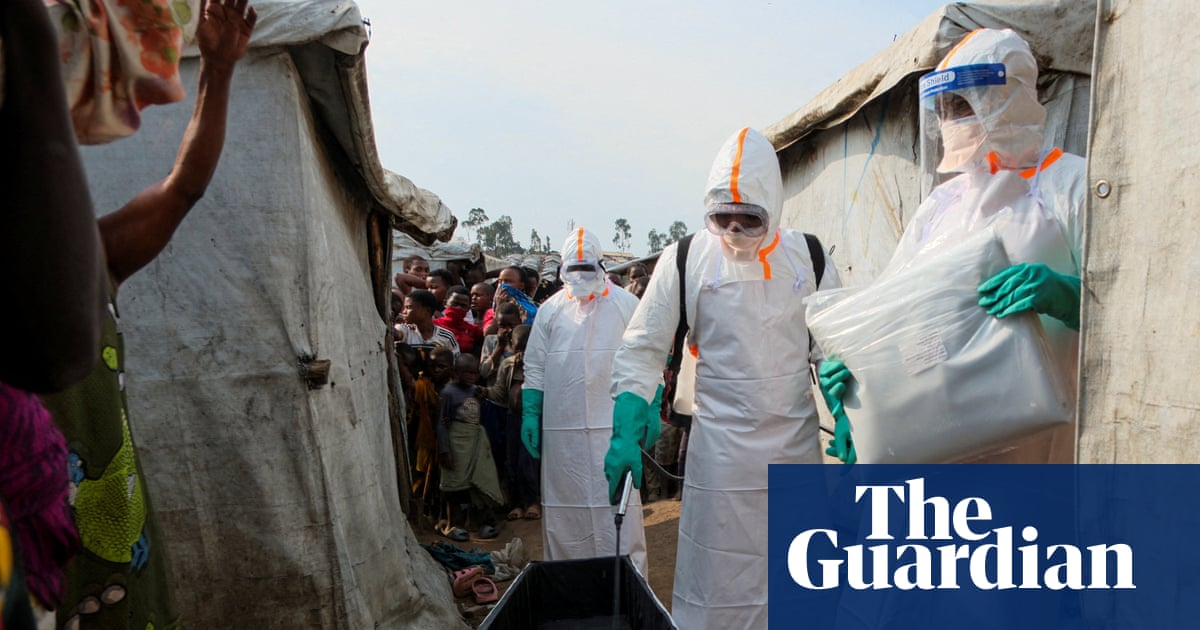
The whereabouts of nearly 300 people who have tested positive for Ebola in the Democratic Republic of the Congo are unknown, according to Dr. Jean Kaseya, director general of the Africa Centers for Disease Control and Prevention (CDC). This lack of information is a major concern, as it hinders efforts to track and contain the spread of the virus. The humanitarian crisis in the affected areas has led to over 1 million people living in camps, which health workers have no access to, further complicating the situation.
Projections from the World Health Organization’s Africa regional office suggest that there will be approximately 8,210 cases and 1,420 deaths by mid-September. The modelling also indicates a 70% chance of the outbreak spreading to neighboring South Sudan in the coming weeks. As of now, there have been 1,118 confirmed cases and 291 deaths in the DRC, as well as 20 cases and two deaths in neighboring Uganda.
A doctor who had been working in the DRC recently tested positive for Ebola upon his return to France, prompting an investigation into how the contamination may have occurred. The DRC authorities have implemented measures to contain the spread, including requiring individuals who have been in affected provinces to wait 21 days before traveling onwards. The outbreak, caused by the Bundibugyo strain of the virus, is the largest on record for five weeks after declaration.
Computer models have simulated three trajectories – low, central, or high transmissibility – with current figures most in line with the central scenario, predicting between 6,636 and 10,287 cases by September 16. The worst-case scenario projects 66,000 confirmed cases by September. To boost contact tracing efforts, authorities plan to recruit 20,000 community health workers from the local area.
The bed occupancy in Ebola treatment centers is at 95%, and Dr. Kaseya emphasized that the peak has not been reached yet. The humanitarian issue must be resolved to stop the outbreak, as camps with displaced people have cases, but health workers have no access to these camps, making it impossible to have a clear picture of the situation. The Africa CDC and the WHO have estimated that $518 million in health spending is needed to tackle the outbreak, with the total rising to $1.4 billion when humanitarian needs are added.
However, only about 13% of the $910 million pledged by international governments and organizations has been supplied so far. Trials for drugs that may be able to treat the Bundibugyo virus are set to begin in the DRC next week, while a trial for an antiviral given to contacts to prevent them from developing the disease will start a week later.