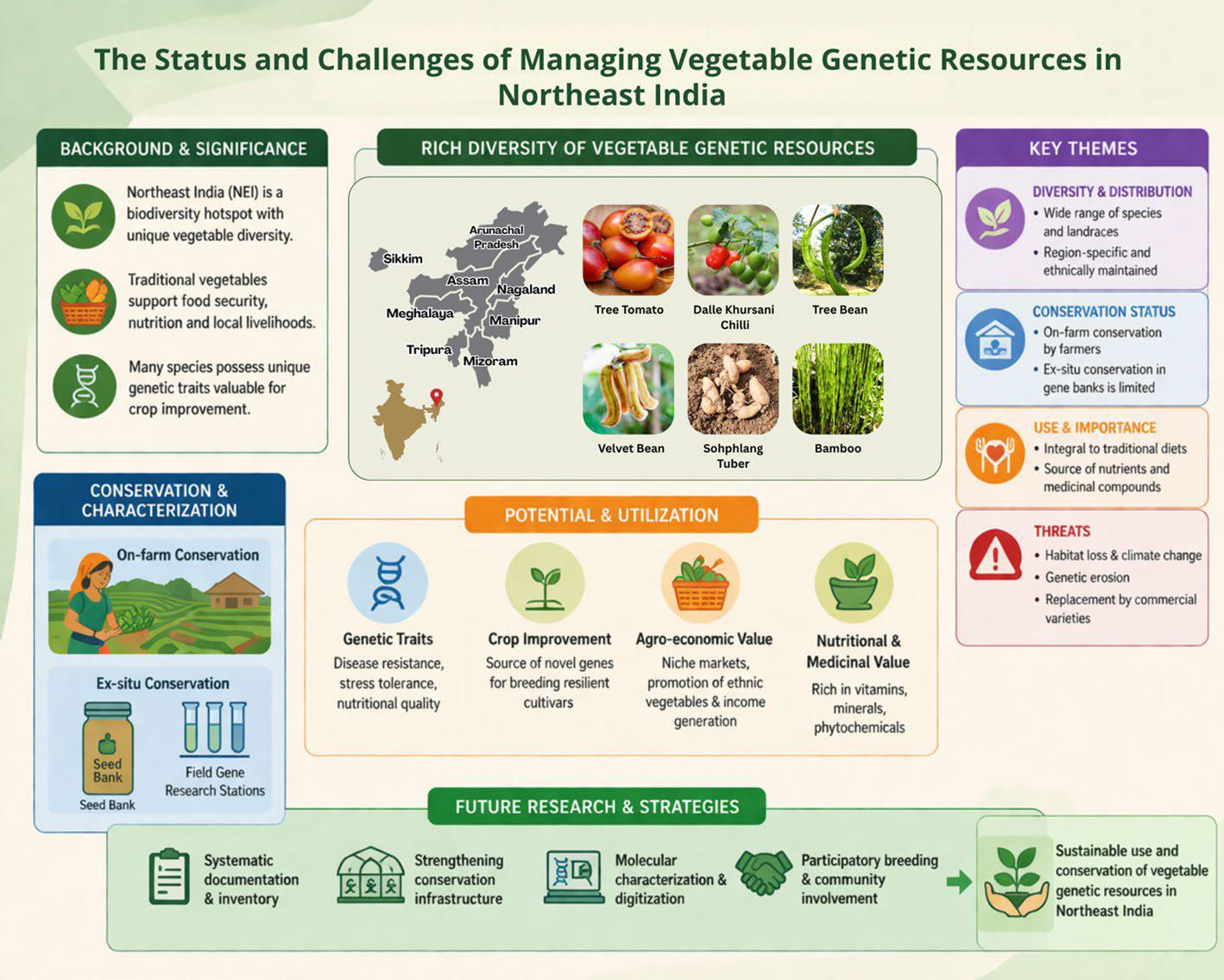
A new study has highlighted the importance of Northeast India’s traditional vegetables in making Indian agriculture more resilient to climate change. The region, which is home to over half of India’s biodiversity, harbours a treasure trove of vegetable genetic diversity, with crops that have adapted to acidic soils, drought stress, and rugged mountain landscapes. The study, published in the journal Discover Plants, notes that these underutilised crops could become increasingly important as climate change places growing pressure on conventional agriculture. The region is home to an extraordinary array of indigenous vegetables, including King Chilli, tree bean, wild yams, winged bean, velvet bean, colocasia, bamboo shoots, and a variety of leafy vegetables, many of which are valued not only as food but also for their medicinal properties and ability to thrive in challenging conditions.
The researchers argue that these traditional vegetables represent a valuable reservoir of genes that could help breeders develop future crop varieties resistant to diseases, insect pests, and environmental stress. However, many of these genetic resources are under threat due to shortening jhum cycles, soil degradation, changing agricultural practices, and the growing dominance of commercial vegetable crops. The study highlights the importance of conserving this diversity, which will require a combination of traditional ecological knowledge and modern science.
The authors call for greater investment in gene banks, molecular characterisation of crop diversity, improved seed systems, participatory breeding programmes, and stronger market support for indigenous vegetables. Northeast India’s average vegetable productivity remains just 10.51 tonnes per hectare, well below the national average of 17.97 tonnes per hectare. The researchers attribute this gap to environmental constraints, limited access to quality seeds, poor infrastructure, and inadequate market linkages.
Crops such as tree bean, sohphlang, fish mint, vegetable fern, and Indian pennywort remain integral to local diets and healthcare traditions. With climate change expected to intensify droughts, floods, pest outbreaks, and other agricultural challenges, the study suggests that some of the solutions may already exist in the fields and forests of Northeast India. The researchers conclude that Northeast India has the potential to become a ‘green reserve’ for the country, but realising that potential will require stronger conservation efforts, improved infrastructure and seed systems, and a blend of indigenous knowledge and scientific innovation to transform the region into a climate-resilient and sustainable vegetable-producing hub.