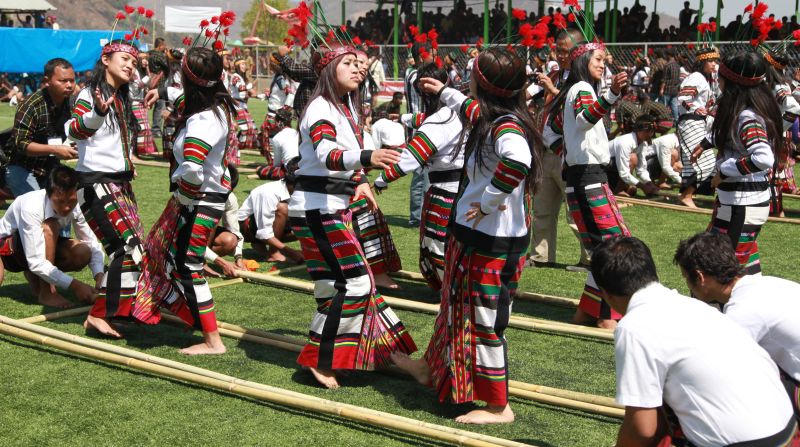
On 24 May 2026, 1.5 lakh tribal men and women from over 500 communities descended on the Red Fort grounds in Delhi. The occasion was the commemorative year of Birsa Munda; the event, Janjati Sanskritik Samagam, was organised by the RSS-linked Janjati Suraksha Manch.
There were traditional dances, saffron banners, speeches on indigenous pride, and a clear political message: Scheduled Tribe status should be withdrawn from tribal individuals who convert to Christianity or Islam, even if they continue to access reservation benefits.
The gathering was sold as a cultural celebration. But the real story was the demand. For years, the idea that conversion to Christianity or Islam should disqualify tribals from ST benefits lived in the margins – in pamphlets, RSS-adjacent conferences, and regional debates.
On 24 May, it stepped into the light, under the shadow of the Red Fort, with Birsa Munda as its unlikely mascot.
Fringe demands are common in Indian politics. What matters is when they enter the mainstream. And nowhere is that shift more dangerous than in Northeast India, where tribe, ethnicity, land, faith, and political identity exist in a fragile, layered balance.
The question is no longer only about the reservation. It is about who gets to define tribal identity in modern India.
Historically, tribal politics in India were about land, autonomy, customary rights, and survival. Whether among the Nagas, Mizos, Kukis, Garos, Khasis, Bodos, Tripuris, Santhals, Mundas, or Bhils, tribal resistance was rooted in territory, dignity, governance, and protection from external domination – not in religious identity.
In colonial India, tribal uprisings responded to land alienation, exploitative taxation, missionary intervention, and the collapse of traditional authority. In postcolonial India, tribal politics revolved around statehood movements, autonomy demands, constitutional protections, forest rights, and cultural preservation.
Today, a different vocabulary is entering that political space: conversion, civilisational identity, demographic anxiety, religious authenticity, and cultural nationalism.
This shift is most visible in central India, where organisations tied to the broader Hindutva movement have built a dense infrastructure of schools, hostels, health camps, and cultural programmes among tribal communities.
Vanvasi Kalyan Ashram (VKA), an RSS affiliate founded in 1952, has operated for decades in tribal regions, promoting the idea that tribal communities are an inseparable part of a broader Hindu civilisation.
The political purpose is clear: tribal identity is no longer discussed primarily in terms of constitutional rights or indigenous autonomy, but rather in terms of cultural integration and national religious identity.
In the Northeast, this transformation is uneven. In Tripura and Assam, where tribal populations coexist with larger non-tribal and Hindu populations, questions of migration, identity, and representation have made tribal politics vulnerable to religious polarisation.
Parties and ideological organisations have increasingly tried to slot tribal identity into broader national narratives tied to religion.
In Christian-majority states such as Nagaland, Mizoram, and Meghalaya, the situation is different. Christianity is not merely a private faith; it is woven into tribal social identity, civil society, education, and political history.
According to the 2011 Census, Christians constitute 87.93% of Nagaland, 87.16% of Mizoram, and 74.59% of Meghalaya – making attempts to frame tribal identity through Hindutva narratives structurally difficult.
The Northeast thus presents a contradiction: Hindutva’s ideological influence within tribal politics is simultaneously expanding, resisted, negotiated, and regionally uneven.
At the heart of the debate lies a distinction that is routinely blurred: tribal identity and Scheduled Tribe status are related, but not identical.
A tribal individual who converts to Christianity or Islam does not cease to be ethnically tribal. A Christian Khasi remains Khasi. A Baptist Naga remains Naga. Conversion may alter religious practice, but it does not erase ancestry, clan lineage, or community identity.
The legal question is different: should constitutional reservation benefits under the ST category continue after conversion?
Under Article 342, the President is empowered to notify communities as Scheduled Tribes. Administrative criteria evolved through the Lokur Committee (1965), which identified primitive traits, distinctive culture, geographical isolation, shyness of contact, and backwardness
Importantly, unlike the Scheduled Castes, the Scheduled Tribes were never constitutionally restricted by religion.
The Constitution (Scheduled Castes) Order of 1950 initially limited SC recognition to Hindus, later extending it to Sikhs and Buddhists, because caste-based untouchability was historically linked to the Hindu social order.
No comparable religious restriction was imposed upon Scheduled Tribes because tribal disadvantage was understood differently, rooted in displacement, land alienation, underdevelopment, and political marginalisation.
In March 2026, the Supreme Court in Chinthada Anand v. State of Andhra Pradesh reaffirmed that Dalits lose SC status upon converting to Christianity or Islam, but explicitly clarified that conversion alone does not lead to loss of ST status.
The Court held that a tribal person may retain ST status after conversion if they continue to possess essential attributes of tribal identity, follow customary practices, and are accepted by the community; ST status is lost only if there is “complete severance from the tribal way of life”.
The law is now clearer. The politics, however, is not.
In Jharkhand, Chhattisgarh, and Madhya Pradesh, Hindutva-linked organisations have built a dense network of schools, hostels, and cultural programmes among tribal communities.
Vanvasi Kalyan Ashram’s signature model includes free hostels with strict schedules and workers sent into tribal belts to promote the idea that tribals are part of “Sanatan” Hindu civilisation.
In the Simdega district of Jharkhand, VKA chief Satyendra Singh has argued that tribal belief systems are part of Hindu tradition and called the demand for a separate Sarna religion code a “conspiracy to divide society” driven by the Church.
The Janjati Suraksha Manch – described as “linked to the RSS and VKA” – has framed ST reservation as rooted in socio-cultural disadvantages and argued that conversion invalidates the rationale for caste-based reservations.
In central India, Hindutva-linked tribal fronts have positioned themselves as defenders of “authentic” tribal identity against missionary influence, while pressing for delisting of converted tribals – a demand that found mass expression at the May 2026 Red Fort gathering.
The irony is palpable: the same organisations that present themselves as tribal allies are pushing a demand that could strip benefits from a significant section of tribal communities.
In Tripura, tribal politics is shaped by demographics, migration, and party competition. At the 2011 Census, Hindus constituted 83.40% of Tripura’s population, Muslims 8.60%, Christians 4.35%, and Buddhists 3.41%.
Indigenous tribal communities are politically central but numerically outnumbered by non-tribal settlers, creating anxieties over land and representation.
The Tipra Motha Party (TMP), led by royal scion Pradyot Bikram Manikya Debbarma, has emerged as the dominant tribal political force. In the 2026 TTAADC elections, TMP won 24 of 30 seats, while the BJP, its ally in the state government, was reduced to 4 seats, down from 8 in 2021.
This shows that tribal political identity in Tripura is not automatically aligned with Hindutva narratives; tribal voters can prioritise indigenous autonomy over national religious framing.
In Nagaland, Mizoram, and Meghalaya, where Christians form overwhelming majorities, attempts to redefine tribal identity through Hindutva narratives face structural resistance.
Christianity is woven into tribal social identity, education, and political history. Conversion altered indigenous belief systems, but in many regions Christianity became entangled with tribal identity rather than replacing it.
That is precisely why the politics of delisting remains so explosive.
The debate is especially layered in Northeast India because religion, ethnicity, tribe, territory, and politics are deeply inseparable.
Long before Hinduism, Christianity, or Islam entered many parts of the region, numerous tribal societies practised animistic, ancestral, and nature-centred spiritual traditions rooted in forests, rivers, mountains, and clan cosmologies. Spiritual life was closely tied to ecology and land.
The traditional belief systems of many northeastern tribes developed largely outside Brahmanical caste structures, even though centuries of interaction existed between tribal societies and neighbouring kingdoms.
The Khasis and Garos interacted with Assamese and Bengali Hindu societies. Tripuri royalty embraced Hindu practices. The Dimasa kingdom underwent significant Hinduisation. Syncretism was part of regional history.
But it is inaccurate to retroactively absorb all tribal histories into a singular Hindu civilisational framework.
Many tribal societies in the Northeast historically existed outside caste structures altogether. Their social systems, kinship patterns, and customary laws operated independently of mainstream Brahmanical organisation.
This historical reality complicates contemporary attempts to frame tribal identity primarily through religious majoritarian narratives. For many northeastern communities, resistance emerges from a deeper historical anxiety surrounding cultural absorption into mainland political frameworks.
In regions where identity is inseparable from land, language, and memories of insurgency or autonomy struggles, attempts to redefine tribal identity through pan-Indian religious narratives are often perceived less as inclusion and more as erosion.
The Delhi gathering showed that the demand to delist converted tribals is no longer fringe; it is being articulated from a large, organised public space.
The Supreme Court’s 2026 judgment in Chinthada Anand clarified that conversion alone does not erase ST status, but the political energy behind the demand suggests the legal question will remain contested.
The deeper question is not just whether converted tribals “deserve” reservation, but who gets to decide what counts as tribal identity in a diverse, religiously plural India.
In central India, Hindutva-linked organisations have reframed tribal identity in civilisational terms. In Tripura, tribal voters rewarded a regional party prioritising indigenous autonomy.
In Nagaland, Mizoram, and Meghalaya, Christianity and tribal identity are so intertwined that any attempt to “Hinduise” tribal identity is likely to be perceived as cultural erasure.
The debate is no longer merely about reservation policy. It is increasingly about “who gets to define tribal identity in modern India”. And that is a question with no easy answer and no neutral umpire.
Views expressed are that of the author and do not reflect EastMojo’s stance on this or any other issue.
Source: EastMojo